
Bunkin Takashimada
文金高島田Traditional Shinto Wedding Ceremony
The crown jewel of Japanese bridal hairstyles, the Bunkin Takashimada is the tallest and most elaborate form of the shimada style. Originally worn by high-ranking samurai women, it became the definitive bridal hairstyle, symbolizing the bride's transformation and devotion.

Wareshinobu
割れしのぶFirst Year as Maiko
The very first nihongami hairstyle a young maiko wears after her debut (misedashi). The Wareshinobu, meaning "split endurance," features a distinctive split chignon bound with vibrant red and silver kanoko (silk fabric), immediately identifying the wearer as a newly debuted apprentice.

Momoware
桃割れYoung Women & Maiko at New Year
The "split peach" hairstyle is one of the most visually charming traditional Japanese styles. Its name comes from the chignon's resemblance to a peach split in half, with a bright red silk ribbon tied through the center. It radiates youthful energy and innocence.

Ofuku
おふくSenior Maiko (2nd year onwards)
When a maiko matures into her second year or beyond, she transitions from the wareshinobu to the ofuku hairstyle. This marks a significant milestone — the fabrics binding the chignon change from red to pink or pastel, signaling growing sophistication and maturity within the geisha world.

Sakko
先笄Final Weeks as Maiko Before Erikae
The sakko is the most poignant hairstyle in a maiko's career — worn only during the final weeks before she undergoes erikae (the collar-turning ceremony) and becomes a full geiko. This bittersweet style signals to the community that a beloved maiko is about to complete her transformation.

Katsuyama
勝山Geiko Formal Events & Gion Festival
Named after the legendary Edo-period courtesan Katsuyama who originated the style, this hairstyle features a wide, flat chignon tied horizontally at the back of the head. It exudes quiet authority and sophisticated restraint — hallmarks of the fully accomplished geiko.

Geiko Shimada
芸妓島田Daily Geiko Engagements
The standard shimada worn by geiko represents the pinnacle of understated elegance. Where the maiko dazzles with color and ornament, the geiko commands attention through perfect proportion, impeccable grooming, and the confident restraint of maturity.
Shimada
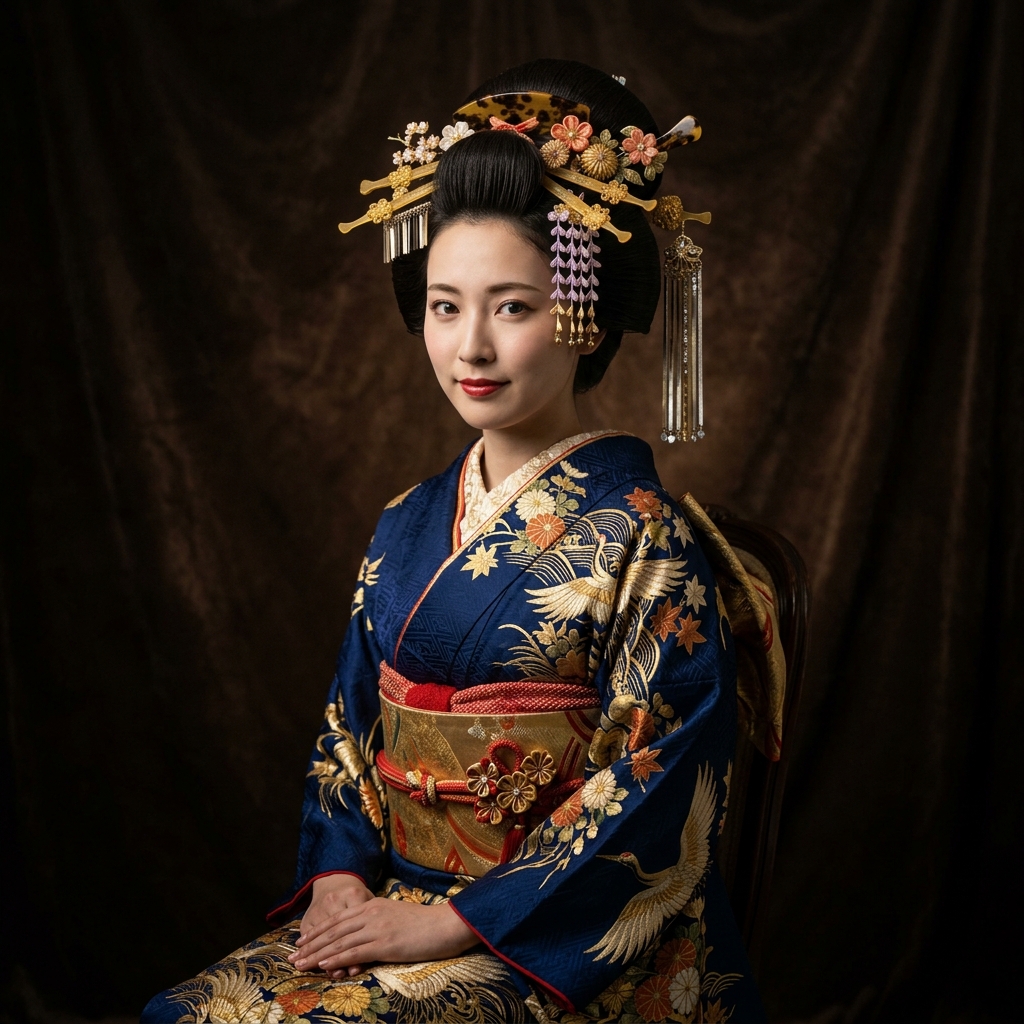
島田Formal Occasions & Traditional Events
The shimada is the foundational hairstyle from which almost all other nihongami styles evolved. Named after the post town of Shimada on the old Tōkaidō road, it features a graceful looped chignon at the crown. Its versatility spawned dozens of variations adapted for every social class, age, and occasion.

Taka-shimada
高島田Young Unmarried Women & Celebrations
The "high shimada" places the chignon at the highest point of the crown, creating a youthful, energetic silhouette. Historically, this tall profile was the exclusive domain of young, unmarried women — the height of the chignon literally and figuratively reflected the wearer's youth and vitality.

Marumage
丸髷Married Women in Daily Life
The "round chignon" was the standard hairstyle for married women throughout the Edo, Meiji, and Taishō periods. Its smooth, rounded shape at the top of the head conveyed domestic stability, maturity, and quiet dignity — the virtues expected of a married woman in traditional Japanese society.

Yuiwata
結綿Young Women & Special Events
The "tied cotton" style features a chignon wrapped or padded with cotton and secured with colorful silk ribbons. This creates a distinctively soft, puffy appearance that radiates youthful charm. It bridges the gap between the most elaborate formal styles and practical daily wear.

Modern Nihongami
現代日本髪Coming of Age Day, Weddings, Photo Sessions
Contemporary hairstylists have reimagined traditional nihongami for the modern era, blending classical proportions with softer, more natural textures. These styles honor the spirit of traditional Japanese hairdressing while embracing modern aesthetics and comfort.